Adinkra symbols come from the Akan peoples of Ghana and Côte d'Ivoire. Each symbol stands for a proverb, a value or a historical idea, so a cloth printed with Adinkra can carry a message. Today the symbols appear everywhere in Ghana: on buildings, furniture, jewellery, logos and fabric.
How Adinkra cloth is made
Traditionally, Adinkra symbols are stamped by hand onto cloth. Craftspeople carve each symbol into a piece of calabash (gourd) to make a stamp, then print with a thick black dye made by boiling the bark of the badie tree. The cloth is first divided into squares with lines drawn using a comb-like tool, and the stamps are printed in rows inside them.
The village of Ntonso, near Kumasi, is famous for this craft. Adinkra cloth was originally associated with funerals and mourning, and darker cloths are still worn on those occasions; brighter versions are worn for celebrations.
Twelve symbols and their meanings
| Gye Nyame “Except God” | The supremacy of God. One of the most widely used symbols in Ghana. |
|---|---|
| Sankofa “Go back and get it” | Learning from the past to build the future. Drawn as a bird looking backwards or as a stylised heart. |
| Adinkrahene “Chief of the Adinkra symbols” | Greatness, charisma and leadership. Three concentric circles. |
| Dwennimmen “Ram's horns” | Humility together with strength. |
| Nyame Dua “Tree of God” | God's presence and protection. |
| Funtunfunefu Denkyemfunefu “Siamese crocodiles” | Unity in diversity: two crocodiles sharing one stomach. |
| Akoma “The heart” | Patience and endurance. |
| Duafe “Wooden comb” | Beauty, care and good hygiene. |
| Nkyinkyim “Twisting” | Initiative, versatility and the twists of life's journey. |
| Aya “Fern” | Endurance and resourcefulness: the fern grows in difficult places. |
| Ese Ne Tekrema “The teeth and the tongue” | Friendship and interdependence, even when there's friction. |
| Hye Won Hye “That which does not burn” | Imperishability and endurance. |
Adinkra in architecture
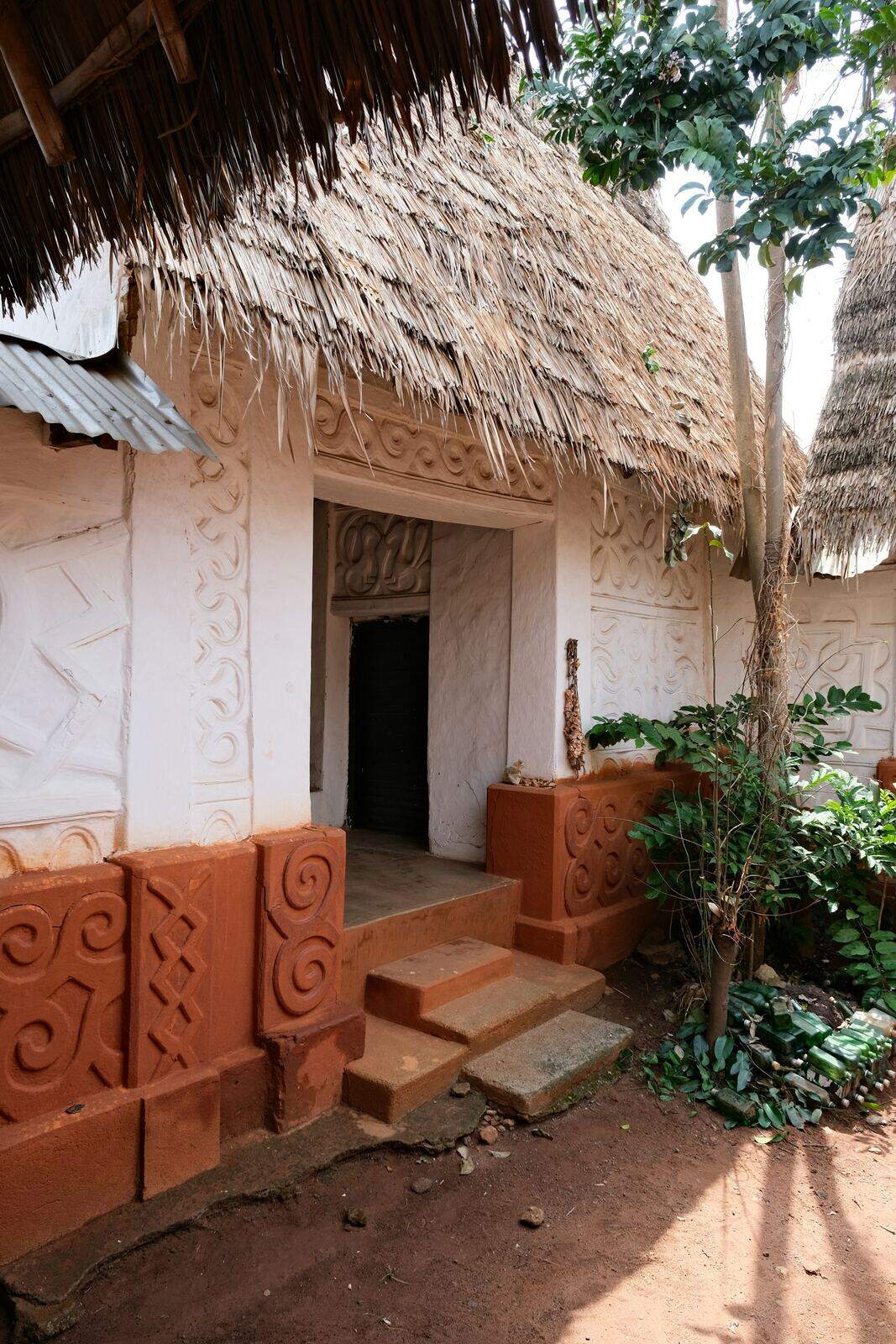
The traditional Asante buildings around Kumasi, listed by UNESCO as a World Heritage site in 1980, are decorated with relief patterns modelled in clay, among them motifs related to Adinkra symbols. They are among the few surviving examples of the architecture of the Asante kingdom.
Using Adinkra symbols respectfully
- Learn the meaning first. Symbols like Gye Nyame have religious meaning for many people. Choose a symbol because of what it says, not only for its shape.
- Buy from Ghanaian makers when you can, especially hand-stamped cloth and carved pieces.
- At home, Adinkra works well as framed prints, stamped textiles, carved wood or tiles. One meaningful symbol often says more than a wall covered in them.
Questions people ask
What are Adinkra symbols?
Adinkra symbols are visual symbols from the Akan peoples of Ghana and Côte d'Ivoire. Each one represents a proverb, value or idea, and they are traditionally stamped onto cloth.
What does Sankofa mean?
Sankofa means "go back and get it". It stands for learning from the past to build the future, and is drawn as a bird looking backwards or as a stylised heart.
What does Gye Nyame mean?
Gye Nyame means "except God" and expresses the supremacy of God. It is one of the most widely used Adinkra symbols in Ghana.
How is Adinkra cloth printed?
Symbols are carved into calabash stamps and printed by hand with a black dye made from boiled badie tree bark. Ntonso, near Kumasi, is known for the craft.