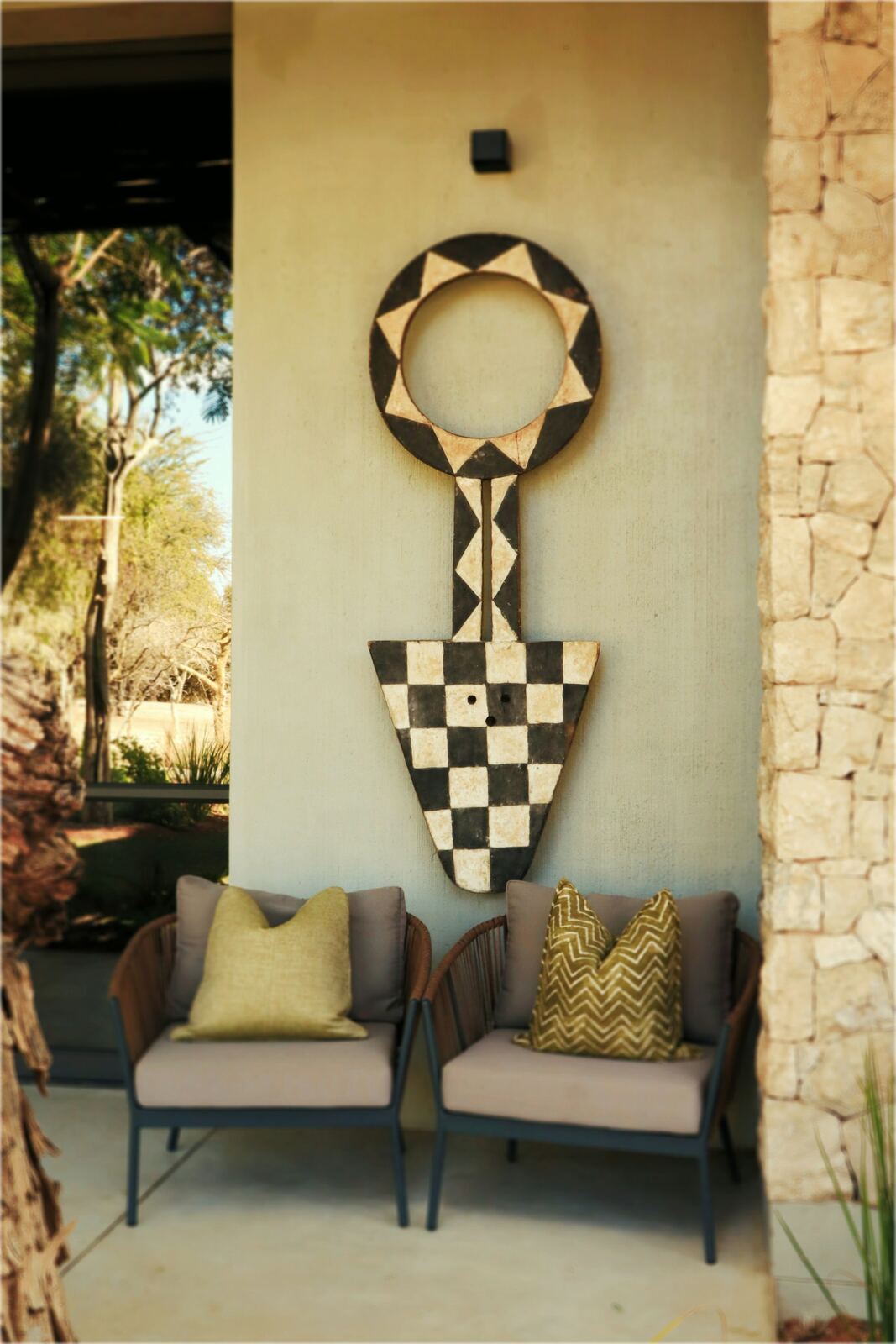
"African decor" often gets reduced to zebra prints, tribal masks and wooden giraffes. Real African design is far richer: woven textiles, painted walls, carved furniture, basketry and pottery from dozens of distinct traditions. The best rooms treat each piece as what it is: a specific object from a specific place.
Start with one textile
Textiles are the easiest way in. Choose one and build around it: a mud cloth throw, a framed piece of kente, cushions in wax print. Pull one or two colours from it for the rest of the room.
Add natural materials and craft
- Baskets. Bolga baskets from Bolgatanga in northern Ghana are woven from elephant grass in bright colours. Zulu baskets from South Africa are tightly woven and often patterned. Hang them on a wall as a group, or use them as planters and storage.
- Stools and furniture. Carved wooden stools, such as Asante stools from Ghana or Senufo stools from Côte d'Ivoire and Mali, work as side tables, plant stands or sculpture.
- Juju hats. These round feathered headdresses from the Bamileke of Cameroon open up like flowers and make striking wall pieces.
- Clay and pottery. Hand-built pots bring the earth tones that tie the rest together.
Colour and pattern
- Earth tones (ochre, rust, clay, black and off-white) are a calm base that suits most African textiles.
- For a bolder room, take inspiration from the painted houses of the Ndebele in South Africa, whose bright geometric patterns were made famous worldwide by the artist Esther Mahlangu.
- Mix pattern scales: one large-scale pattern, one small, and plenty of plain surfaces in between.
Clichés to avoid
- Animal prints everywhere, and wildlife figurines as the "African" touch.
- Walls of masks. Many masks are sacred objects; one well-chosen piece, with its origin known, says more.
- Mixing everything labelled "African" into one room with no idea of where each piece comes from.
Buy with care
- Ask where a piece was made and by whom. Good sellers know.
- Buy directly from African makers and cooperatives when you can; the money goes to the craft.
- Be wary of "antique" claims at low prices. Most pieces on the market are new, and that's fine when they're sold honestly.
Questions people ask
What is African interior design?
African interior design draws on the textiles, furniture, basketry, pottery and architecture of many different African cultures, usually combining natural materials, earth tones and meaningful pattern.
How do I decorate with African design without it looking cliché?
Start with one authentic textile, add natural materials and a few well-chosen crafted pieces, keep plenty of plain surfaces, and avoid filling the room with animal prints and masks.
What are Bolga baskets?
Bolga baskets are hand-woven baskets from Bolgatanga in northern Ghana, made from elephant grass and often dyed in bright colours.
What is a juju hat?
A juju hat is a round feathered headdress from the Bamileke people of Cameroon, now often used as a wall decoration.