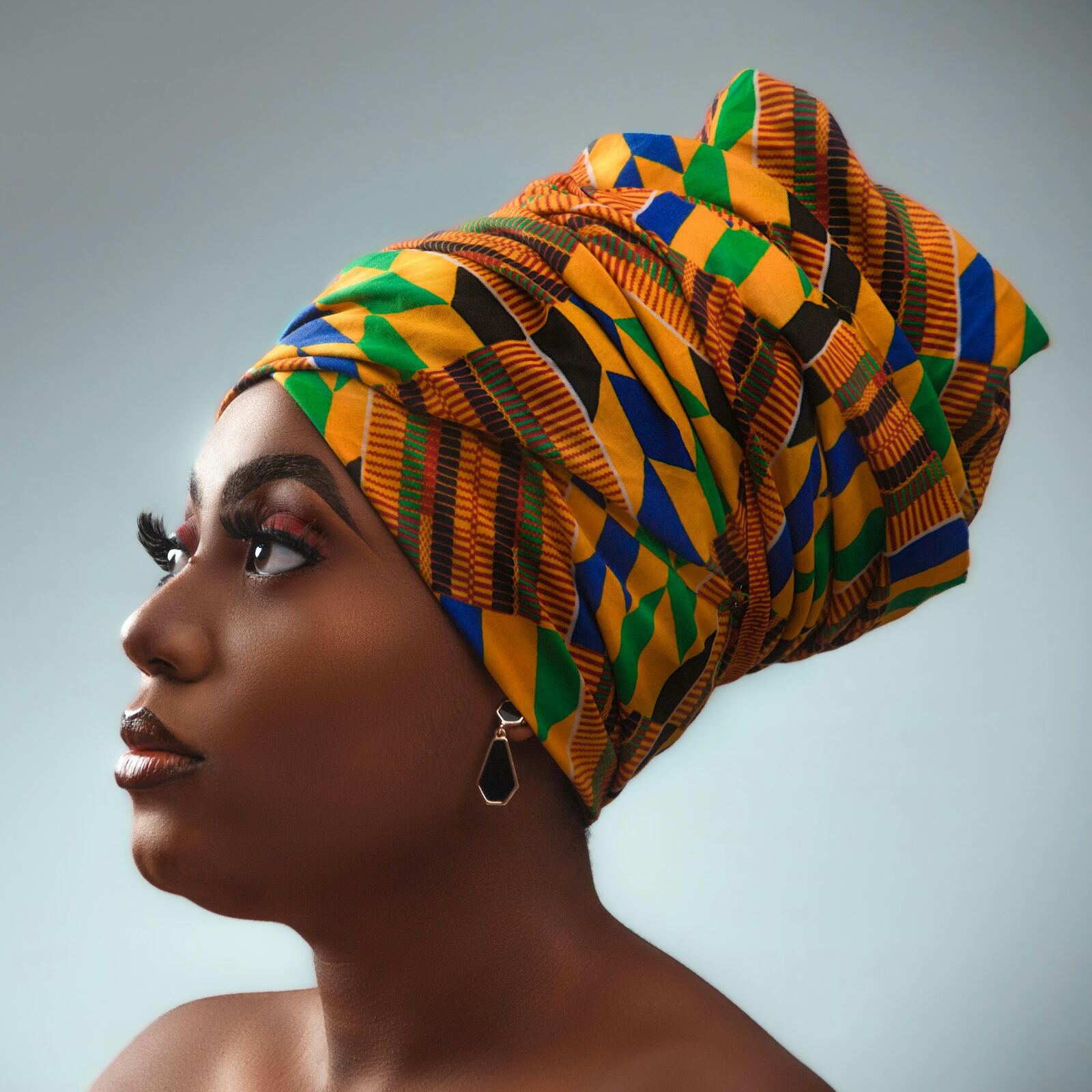
Kente is a woven cloth from Ghana, made by the Asante (Ashanti) and Ewe peoples. Once reserved for royalty and sacred occasions, it is now worn at weddings, festivals, graduations and national celebrations, and has become a symbol of pride across the African diaspora.
How kente is woven
Kente is woven on a narrow horizontal loom operated with foot treadles. Each weaver produces long strips about 10 cm (4 in) wide. Dozens of strips are then sewn together edge to edge to make a full cloth. A man's cloth, worn wrapped around the body like a toga, can take many strips and weeks of work.
The village of Bonwire, near Kumasi, is the best-known centre of Asante kente weaving. Ewe weavers in south-eastern Ghana, around towns like Agbozume and Kpetoe, have their own tradition, often with more muted colours and small figurative motifs such as animals or objects woven into the strips.
Names and patterns
Each kente design has a name. Names can refer to proverbs, historical events, important people or qualities, and some designs were traditionally reserved for chiefs. Like Adinkra symbols, kente is a way of saying something without words.
What the colours are said to mean
These are the meanings most commonly given for kente colours. They're a guide, not a strict code: weavers and wearers also choose colours for beauty and occasion.
- Gold: royalty, wealth, status
- Yellow: preciousness, fertility
- Green: growth, harvest, renewal
- Blue: peace, harmony, love
- Red: struggle, sacrifice, strong feeling
- Black: maturity, spiritual energy
- White: purity, celebration
- Maroon: mother earth, healing
Woven kente or printed kente?
- Woven kente is made of sewn strips, so you'll see seams every few centimetres. The pattern is part of the weave and looks the same on both sides, with a raised texture.
- Printed kente is ordinary cotton printed with a kente-style pattern. It's flat, has no strip seams, and the back is usually paler.
Both are common, and printed kente is widely worn in Ghana and beyond. Woven kente costs far more because of the hours of work behind it, which is why it is kept for special occasions.
Wearing and using kente respectfully
- Kente stoles are popular at graduations, especially in the United States. Buying them from Ghanaian weavers or reputable sellers supports the craft.
- At home, a woven strip or a small cloth can be framed or used as a table runner. Avoid cutting up old or ceremonial cloths.
- Kente's colours are strong. Let it be the main pattern in a room or outfit, with plain colours around it.
Questions people ask
Where does kente cloth come from?
Kente comes from Ghana, where it is woven by the Asante and Ewe peoples. Bonwire, near Kumasi, is the best-known Asante weaving centre.
What do the colours of kente mean?
Commonly cited meanings include gold for royalty and wealth, green for growth and harvest, blue for peace and harmony, red for struggle and sacrifice, and black for maturity and spiritual energy.
How is kente made?
Kente is woven on a narrow treadle loom in strips about 10 cm wide, which are then sewn together edge to edge into a full cloth.
Is printed kente real kente?
Printed kente reproduces the look of kente on ordinary fabric. Woven kente is made of sewn strips with the pattern in the weave. Both are widely worn, but woven kente is the traditional and far more labour-intensive cloth.